

 Individualreisen
 Gruppenreisen
 Private Gruppenreisen
 Familienreisen
 Vogelbeobachtung
 Artenschutz aus Leidenschaft
 Paramelis – Litauen
 La Tigra – Costa Rica
 Kalinzu Forest – Uganda
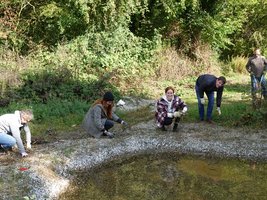 Kali-Gelände - Deutschland
 Unsere Grundpfeiler
 Besondere Unterkünfte
 Zertifizierte Reiseleiter
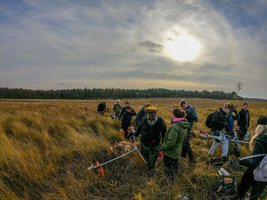 Wo geht Ihre Spende hin?
 Auszeichnungen
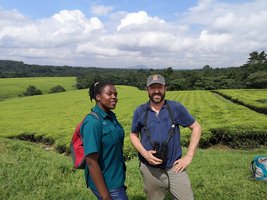 Unser Engagement
 Fortschrittsbericht 2025
 Nachhaltig reisen im Überblick

I thought for a long time about how best to begin this report in a way that would do justice to what I experienced. There are journeys that are beautiful. And there are journeys that are simply unforgettable. This one definitely belongs in the second category.
Invited by the Maharashtra Tourism Board, Air India and AERTicket, I set off on a journey to Maharashtra – a federal state which, in terms of population, is the second largest in India.
Even the broad outline of the itinerary gives a sense of how varied these days were: after the international direct flight from Frankfurt to Mumbai, I continued on to Chhatrapati Sambhajinagar, formerly known as Aurangabad. There, the programme included some of India’s most important cultural and historical sites – from the rock-cut temples of Ajanta and Ellora to monumental temple complexes, forts, mosques and palaces. The journey eventually ended back in Mumbai, where colonial history, urban chaos and a vivid present-day energy came together.
It was a journey that deliberately brought together many contrasts: between big-city life and rural calm, between millennia-old history and modern dynamism, between packed programme days and moments of pause. This very mixture is what makes Maharashtra so special – and what made this journey an experience that went far beyond classic sightseeing.
An opening that set the bar high
The journey actually began long before my arrival in India. More precisely, it began with a flight experience I will not forget any time soon.
I travelled from Frankfurt to Mumbai on a direct flight in Premium Economy aboard Air India’s brand-new Boeing 787-9 Dreamliner. Even at the airport, we received an exceptionally warm welcome, which immediately set the tone for the entire trip.
A special highlight right at the beginning: before boarding officially started, we were allowed to be the first on board so we could take a quiet look at the new Business Class. It was a moment that showed just how much pride Air India is currently putting into its product – and rightly so.
I have already written in detail about my flight experience in a separate post on travelling with Air India. But to keep it brief here: it was truly excellent. The design of the new aircraft and the overall atmosphere were very inviting – modern, stylish and pleasantly comfortable at the same time. Above all, however, the service stood out to me. I have rarely experienced such warmth from cabin crew.
It would have been hard to imagine a better start to this journey.
Arriving in another world
At the latest after landing in Mumbai, I realised that in just eight hours you can wake up in a completely different world: warmth, intense sounds, scents. It was the feeling I had been longing for for such a long time. This is life, in every step you take here. Chaotic and crowded, but in such a wonderful way that I can hardly put it into words. I was immediately captivated.
After a short stay at the ITC Maratha near the airport and several B2B meetings, we continued that same evening with a flight to Aurangabad, now officially called Chhatrapati Sambhajinagar – and with that, to the place where Maharashtra perhaps reveals its greatest strength: history you can truly experience.
Ellora Caves - the absolute climax of the journey
The route from Aurangabad led through rural landscapes, and I really enjoyed watching the scenery pass by from the window.
For me, the Ellora Caves were the most powerful part of the entire journey.
Walking through the site, you immediately sense that this is not about a single monument, but about an entire world of spirituality, art and religious history carved into stone. Buddhist, Hindu and Jain rock-cut temples stand here in close proximity – not simply side by side in a modern sense, but as a historically grown coexistence that developed over centuries.
The undisputed highlight is, without question, the Kailasa Temple. I would even put it this way: alongside Machu Picchu, this temple ranks among the most memorable experiences I have had so far at the great archaeological sites of the world.
The Kailasa Temple was not built. It was carved entirely out of a single rock. From the top down, with a level of consistency and precision that is difficult to grasp even today. Standing before it, you struggle at first to understand what you are actually seeing: a complete temple architecture, released from solid stone, with huge figures, courtyards, reliefs and structures – as if the mountain itself had become a sculpture.
It was not only the scale that left such a strong impression on me. Even more, it was the feeling of standing before something that combines human imagination and craftsmanship in an extreme form.
This place touched me deeply and, for a moment, left me speechless.
Ajanta Caves - Art, Silence and a Different Sense of Time
The journey to the Ajanta Caves is also very interesting. The road leads through rural areas, offering a glimpse of Maharashtra’s extensive agriculture as well as everyday life in the region.
The caves lie in a secluded, horseshoe-shaped gorge, surrounded by nature. Depending on the time of year, the landscape is either lush green and dotted with small waterfalls, or much drier and more barren.
Ajanta is above all a place of painting and storytelling. The Buddhist rock-cut temples served for many centuries as monastic and prayer spaces, and their wall paintings rank among the most important surviving works of early Indian cultural history. Scenes from the life of Buddha, Jataka tales and depictions of everyday life appear remarkably vivid and immediate, despite their age.
Daulatabad Fort – The Impregnable Fortress
Daulatabad Fort, which can be easily visited on the way to Ellora, is one of the most striking fortifications in the region – partly because of its location, but above all because of its history.
Originally built in the 12th century as Deogiri Fort, the site was later renamed Daulatabad under Muslim rule. The fortress became particularly well known due to a dramatic historical shift in power: in the 14th century, Sultan Muhammad bin Tughluq moved his capital from Delhi to Daulatabad – a radical attempt to reorganise the empire geographically, which ultimately failed.
The fortress itself was considered almost impossible to conquer. Its position on a steep hill, the winding approaches, dark tunnels and complex defensive systems make it clear why it was regarded as one of the strongest forts in India. As you make your way up, it quickly becomes apparent that this place was not only of military importance, but also a symbol of power and control.
Grishneshwar Temple and Bibi Ka Maqbara – Maharashtra’s “Mini Taj Mahal
Very close to Ellora lies the Grishneshwar Temple, one of the twelve Jyotirlinga temples and therefore one of the most important Shiva temples in India.
The temple remains an active place of pilgrimage to this day and radiates a very different energy from the monumental cave complexes in the surrounding area. While Ellora is shaped by stone and history, here the focus is on living faith.
The atmosphere is particularly striking: pilgrims, rituals, prayers – everything takes place within a comparatively compact yet intense space. The temple makes it very clear that spirituality here is not only historical, but remains deeply rooted in everyday life.
Bibi Ka Maqbara leaves a completely different, but no less memorable impression. Often referred to as the “Mini Taj Mahal”, it is in fact a mausoleum built in the 17th century by Prince Azam Shah for his mother. At first glance, the architecture strongly recalls the famous Taj Mahal in Agra – white domes, symmetrical gardens and delicate details.
And yet Bibi Ka Maqbara feels less monumental, more restrained and almost intimate. It is precisely this somewhat reduced scale that gives the building its own identity. It is not simply a copy, but rather a place of remembrance with a very personal story.
Back in Mumbai - an intense ending
Back in Mumbai, the final day of the journey had already begun. Mumbai truly left a strong impression on me: so many people in a city so vast that it almost feels endless.
The Gateway of India and the legendary Taj Mahal Palace stand like symbols of the city. For me personally, however, the most memorable experience came at the very end: Dhobi Ghat, probably the largest open-air laundry in the world. I would genuinely recommend this experience to anyone visiting Mumbai. It may not be one of the classic sights, but it left a lasting impression on me.
People, that make the difference
As remarkable as the places were, in the end it was the people who truly made this journey special.
Those I had the chance to get to know, as well as those I may only have met briefly, shaped these days in their own unique way. We marvelled, laughed, learned and simply shared wonderful moments together. Memories which, at least for me, I know will stay with me for a long time.
Conclusion: Why This Journey Will Stay with Me Forever
Vielen Dank für die Organisation und Einladung:
Reisevorschlag
Naturreisen mit travel-to-nature
- Einzigartige Naturmomente
- Perfekte Organisation
- Excellente Naturguides
- Transparentes Engagement
- Handverlesene Unterkünfte
Grüner Mehrwert
- Pro Teilnehmer spenden wir 25€ an unser Moorschutz-Projekt in Litauen
- Transparentes Engagement für den Natur- und Artenschutz